This page is generally less interesting than my weblog, which gets
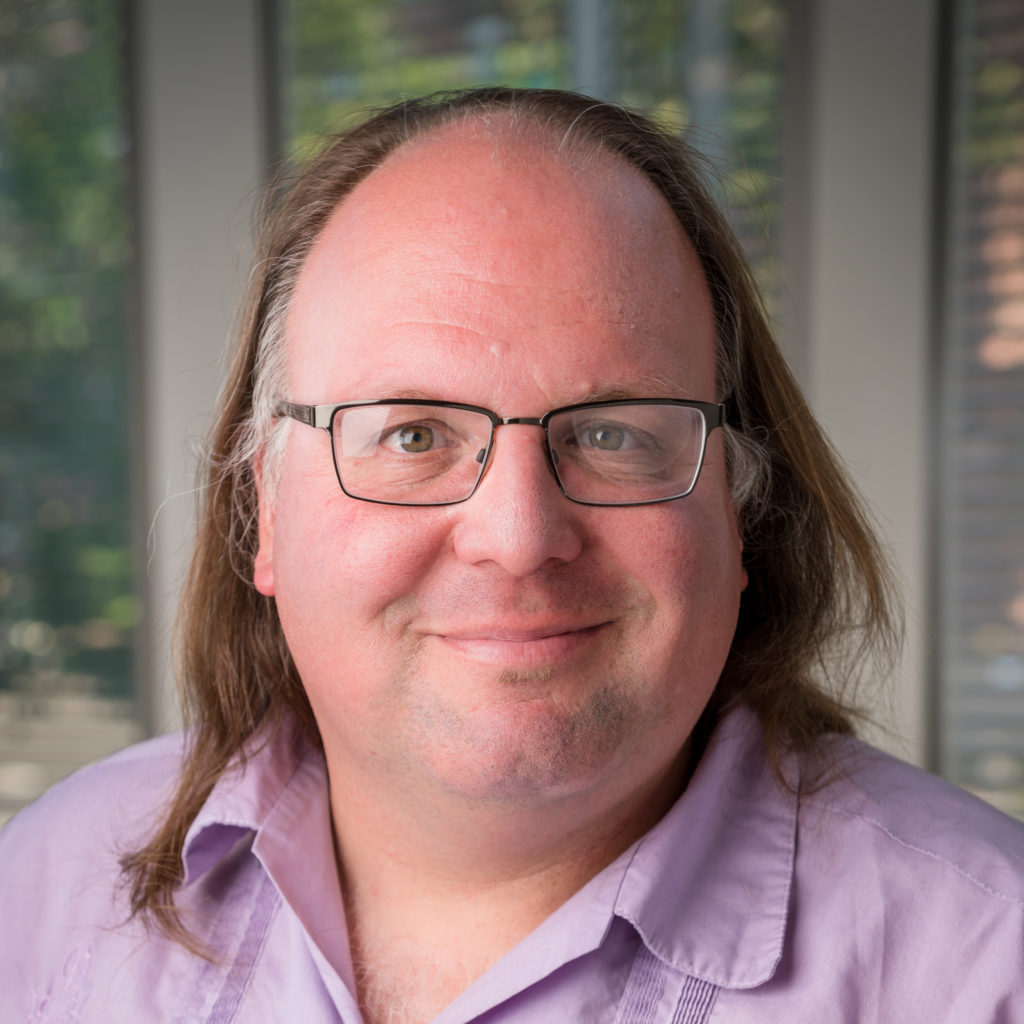
maintained a lot more frequently than this does. You should read that instead, unless you're looking for a bio of me, which more or less follows below.
Global Voices
Rebecca MacKinnon and I founded Global Voices in 2005 when we were both fellows at the Berkman Center for Internet and Society. Initially, we'd planned to build an aggregator of blogs from around the developing world, based on my interest in Africa and her focus on China. As more people got involved with the project, it's become something much larger and more exciting: a global community of citizen media authors, an advocacy group that works to preserve freedom of speech online, a media development organization that promotes participatory media in developing nations, a vast and distributed translation project, and a crazy set of friends from every corner of the world. It's been a joy to be involved with and is one of the projects I'm proudest of.
The Berkman Center
My "day job" is as a researcher at the Berkman Center for Internet and Society at Harvard University. Berkman is a remarkable institution - it's a think tank for folks who effect change as well as study phenomena. A number of my favorite people in the world of technology and international development hang their hats there and, as a result, it's a great place to explore activist and research ideas. I work on three general topics there:
- Quantitative Media Analysis. Much of mainstream media criticism is based on trading illustrative anecdotes. This makes for enjoyable reading, but doesn't always give a fair picture of what stories are and aren't gaining attention. I've been trying to study these issues - and especially the tendecy of major media outlets to report more thoroughly on rich nations than on poor ones since 2003, using various tools. An early project, Global Attention Profiles, is mostly dead, though still has a couple of working tools that map attention in online media. A much more robust platform, Media Cloud, is under development - we plan a major revision to be released late in 2010. This article in the New York Times gives an excellent overview of what we're trying to do with Media Cloud. I work closely with Hal Roberts and Yochai Benkler on these issues.
- Free expression and the digital world. As the internet becomes an increasingly important space for public discourse, governments, companies and individuals try to assert control over online speech. Sometimes this manifests as state-based official censorship; often it's more subtle and complex, disguised as criminal activity or technical dysfunction. With John Palfrey and Hal Roberts, I work on projects that look at the state of censorship circumvention tools (here's our 2007 report), the use of distributed denial of service attacks to censor content, the economics of proxy servers and the role of "intermediaries" - hosting providers, social network services - in censoring online content. With Rebecca MacKinnon and other friends, I advocate for a definition of "internet freedom" that doesn't just look at censorship by the Chinese and Iranian government, but considers other facets of the problem, including the responsibility of internet giants like Google and Facebook. Two blog posts may be helpful for those interested in those issues: Beyond Circumvention, and Protect, then Project.
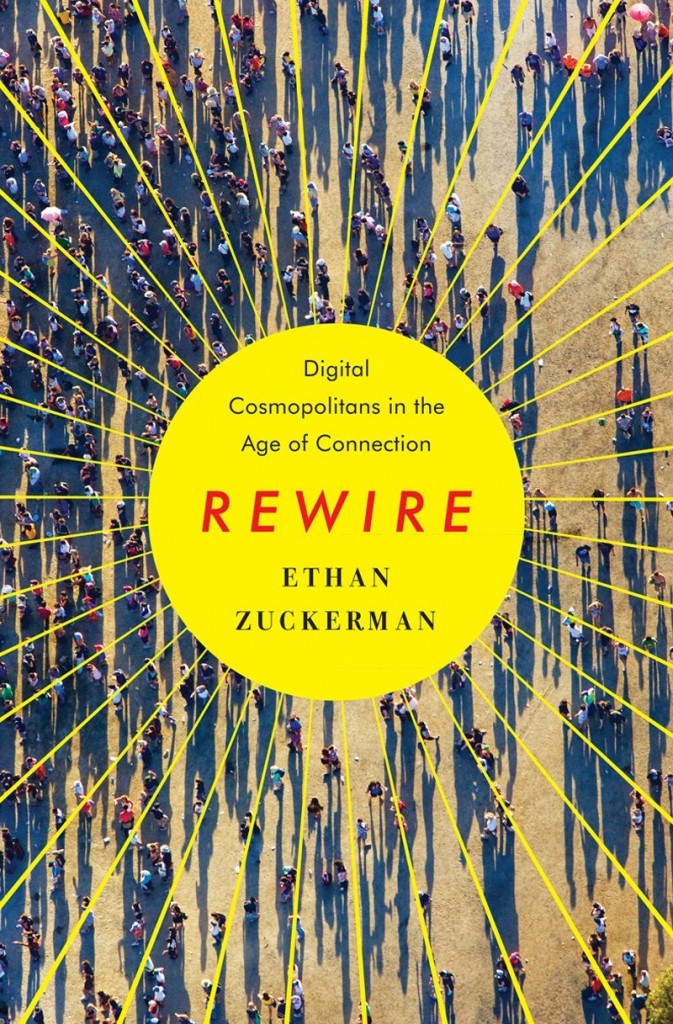
- The Wider Web. Much of my writing focuses on questions of whether the Internet is leading us to have a wider view of the world, or whether we're becoming trapped in the "echo chambers" described by Cass Sunstein or the "filter bubbles" discussed by Eli Pariser. At Berkman, I'm running a number of small experiments that try to discover how parochial or cosmopolitan the use of the internet is in different communities - these questions are inspired in part by Pippa Norris's work, especially her book Cosmopolitan Communications. I've been writing for the past several years on ways to make the internet work better for creating transnational connections, focusing on making translation transparent, engineering serendipity, monitoring what content we consume and leaning on bridge figures and xenophiles - I talk at length about these ideas in my TED talk, and am (slowly, painfully) working on a book on the subject.
Speaking
I do a good deal of public speaking, primarily because it's a great way to develop new ideas, meet new people and see different parts of the world. Occasionally, it also pays my bills. If you're interested in having me come speak to your event/company/bar or bat mitzvah, the nice folks at Monitor Talent manage this aspect of my life for me.
Conference Blogging
In 2004, I was invited to speak at the (excellent, extremely fun) Pop!Tech conference in Camden, Maine. Taking inspiration from my friend David Weinberger, I tried to create a blog post for each talk given at the conference. This quirky practice became a habit, and I started getting invited to great conferences just so I could blog them. My friend Bruno Giussani and I blogged several TED conferences together, at one point declaring ourselves "Twinbloggers". (We're both big, taciturn, and very grumpy when you interrupt us as we're blogging.) He and I compiled a guide to conference blogging that I think is still pretty useful. I wish more people would blog at conferences - it's no fun being the only one.
Boards
I sit on the boards of several nonprofit organizations. The longer I spend in the nonprofit space, the more I become convinced that this is some of the most important work I do. I chair the board of Stichting Global Voices, the Dutch foundation that oversees the Global Voices project. I'm on the boards of Ushahidi (a pioneering Kenyan company which makes open sourced citizen reporting software), PenPlusBytes (a Ghanaian NGO that helps reporters understand and utilize technology to do better journalism and increase transparency) and the US programs board of the Open Society Institute.
Older work: Geekcorps
Geekcorps was a nonprofit organization that I founded with Elisa Korentayer in 1999 and co-led with Ana Maria Harkins from 2001-2004. It was an international non-profit organization that transfers tech skills from geeks in developed nations to geeks in emerging nations, especially entrepreneurial geeks who are building small businesses. In other words, a Peace Corps for geeks. I've had the pleasure of leading teams of extremely cool people in North Adams, MA, USA; Osu, Accra, Ghana; Dakar, Senegal and Bamako, Mali. I stepped down from the organization in April, 2004.
Geekcorps succeeded several orders of magnitude beyond any reasonable expectation, yielding not only some great e-development success stories, but a cool ad for whiskey and occasional friendly words in the press. In August 2001, Geekcorps joined forces with the International Executive Service Corps, resulting in an organization the BBC refers to as "Geeks and Geezers". IESC now manages Geekcorps from its DC office, though the project is largely dormant.
Much older work: Tripod
For many years, this page was hosted on Tripod, for a variety of sentimental reasons. (Now only a few side projects are.) In 1994, I dropped out of graduate school and joined a couple of friends in Williamstown, MA in building one of the first "pure" dot.com companies - Tripod. As the only person on the team who knew HTML, I got to be "tech guy" - outclassed by guys who could program circles around me, I became bizdev guy, legal guy, customer service guy and R&D guy before settling, briefly, on "retired guy".
Contrary to popular belief, Tripod wasn't originally intended to be a webhosting provider or homepage site. In its first incarnation, it was designed to be a collection of content and services for 20-somethings, described as "tools for life". Discovering earlier than most that online content is a tough sell (check out some of our server logs from late 1995 if you don't believe me), we moved into the growing area of user-created content before discovering (again, earlier than most) that fifteen million users a day weren't particularly helpful if they didn't buy anything or click on ads. We sold the company to Lycos in 1999, slightly before money paid for internet companies got way out of hand, but well before selling Internet companies was harder than selling ice in Siberia.
Those annoying pop-up windows? My fault, at least in part. I designed a vertically-oriented popup window that included navigation tools and an ad for inclusion on webpages at some point in late 1996 or early 1997. It was intended to be less intrusive than inserting an ad into the middle of a user's homepage. I won't claim responsibility (irresponsibility?) for inventing the damned things, and I disclaim any responsibility for cascading popups, popups that move to the top, and those annoying "bot" windows that open different popups every few minutes. Still, the fault is at least in part mine, and I'm sorry. :-)
People and Places
My wife Rachel and I live in Lanesboro, MA, a rural town of about 3,000 in Berkshire County, MA, USA. Rachel is a poet, essayist, blogger and rabbinic student. We're the parents of Andrew Wynn Kwame Zuckerman, better known as Drew, who's got his own blog as well.
Miscelany
If you'd like to contact me, email is the best bet. My PGP public key is on the MIT keyserver.